
The complete guide
How to Feed Leafy Plants, Herbs and Greens With a Liquid Nutrient
The problem with feeding leafy plants
Most people start with water. Water the lettuce, water the basil, water the monstera in the corner, and hope for the best. For a few weeks that works fine, because potting mix comes with a small nutrient charge built in and fresh seedlings are not asking for much yet.
Then growth slows. The newest leaves come in smaller than the ones before them. Colour fades a shade. In a hydroponic tray, the whole thing stalls faster, because there is no soil holding anything in reserve. Nothing dramatic goes wrong, the plants just stop getting better.
That is the gap a liquid nutrient for leafy plants fills. It puts back the minerals that leafy growth uses up, at a rate the plant can actually take in, and it does it in a form you can measure and repeat.
Why leaf growth needs a different feed
Plants grown for leaves and plants grown for fruit spend their energy differently. A tomato plant in flower is building sugars and structures to carry fruit. A pot of coriander or a philodendron is doing none of that. It is making stems, leaf tissue and chlorophyll, over and over.
That shifts what it needs. Nitrogen in a form the plant can use quickly, potassium to keep processes moving, calcium for cell walls, magnesium sitting right in the middle of the chlorophyll molecule, and trace elements in small amounts to keep everything else working. This concentrate carries nitrate-nitrogen, potassium, calcium, magnesium and trace elements, which is the shape of a foliage feed rather than a fruiting one.
It is worth saying plainly: this is not a flowering or fruiting formula. If your plan involves harvesting fruit, you want something built for that job. If your plan involves cutting leaves, you are in the right place.
How the concentrate works
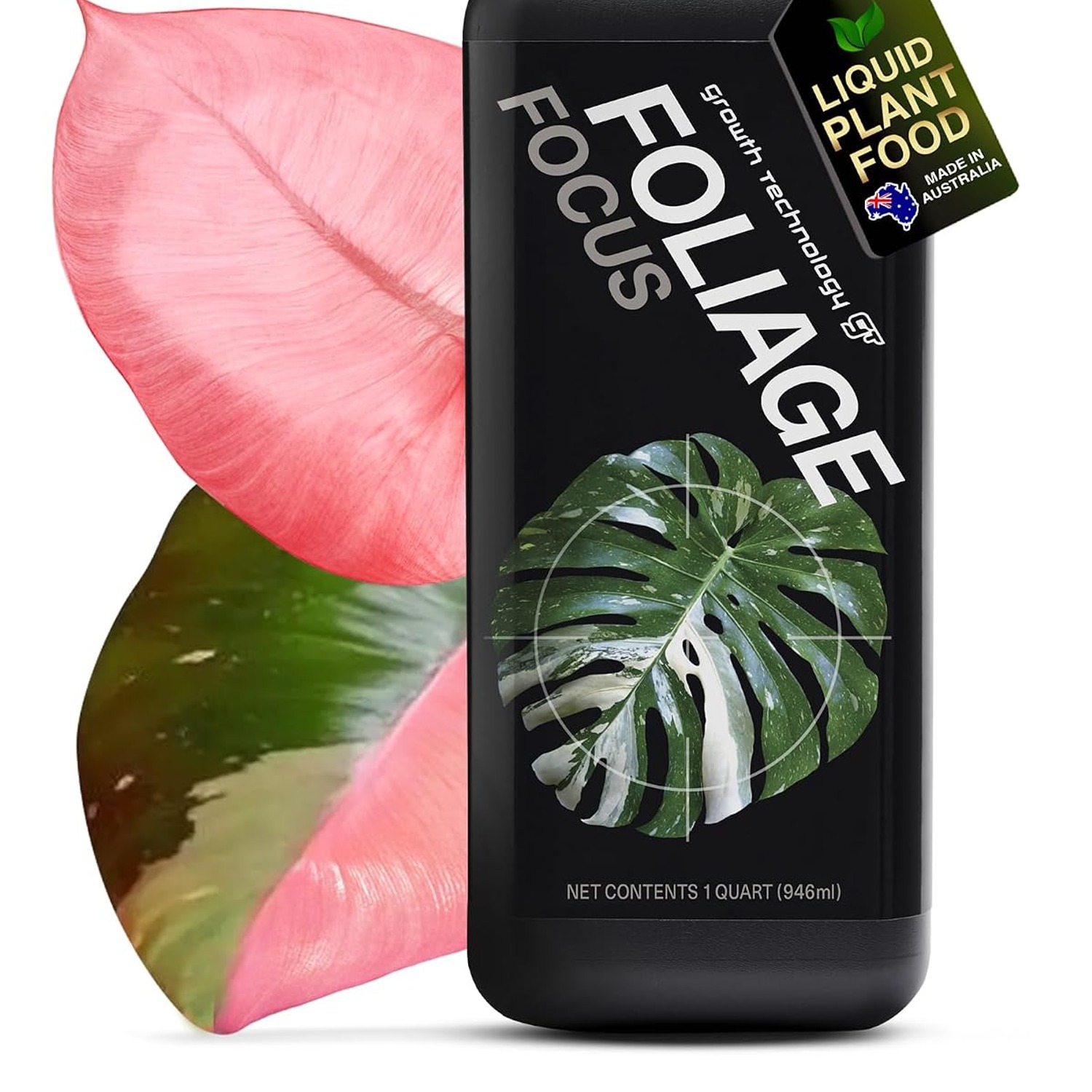
It arrives as a 946 ml liquid concentrate in a bottle. You never pour it neat onto a plant. You dilute it into water, then water or spray with the result.
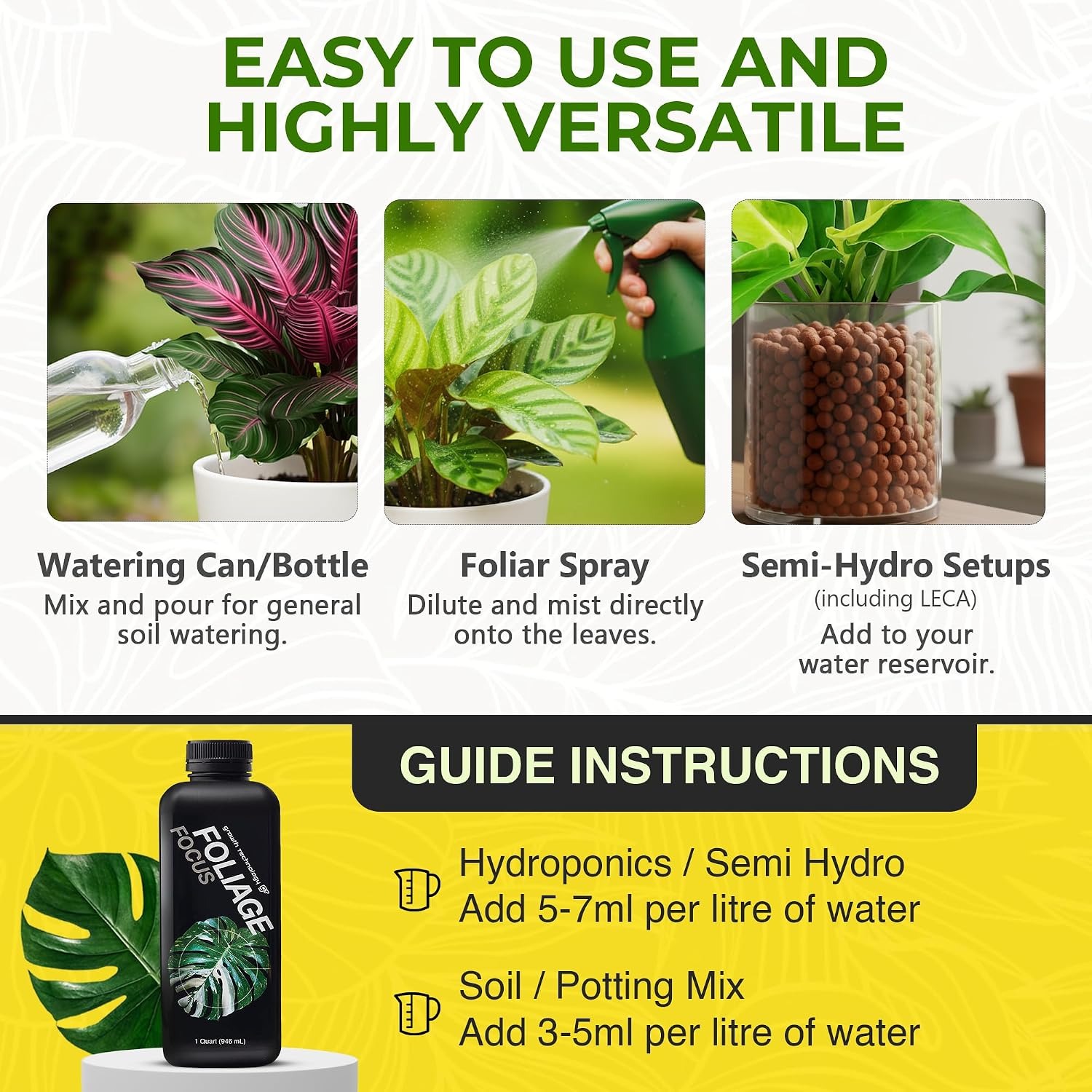
Two main rates apply. In soil or potting mix, use 3 to 5 ml per litre of water. In hydroponics, use 5 to 7 ml per litre. The listing also sets out mixing ratios of 1 to 20, 1.5 to 20 and 2 to 20, described as weak, normal and strong. The logic is straightforward. Feed stronger when plants are growing hard, and weaker when growth is slow, whether that is because of cooler weather, shorter days or a plant resting between flushes.
A dosing syringe or a measuring spoon makes a real difference here. Eyeballing a squirt into a watering can is how people end up feeding twice as much one week and half as much the next, then wondering why results are uneven.
Where you can use it
The same bottle covers several ways of growing, which is part of its appeal for anyone running more than one setup.
In pots of potting mix, it goes into the watering can. In a hydroponic reservoir, it goes into the water before the pumps come on, stirred through properly. In semi-hydro with clay pebbles, it works the same way, with a rate somewhere between the two. As a foliar spray, you dilute it and mist the leaves with a clean spray bottle.
Foliar feeding is worth a note. It is a top-up, not a substitute. Leaves can take in some nutrient through their surfaces, but the roots do the heavy lifting. Spray in the cooler part of the day, avoid blasting the leaves in bright direct sun, and keep the mist off floors and furniture. For a hydroponic herb nutrient solution, root feeding should always be your main channel.
Who it suits
Home growers running a small hydroponic setup for herbs, lettuce and salad greens are the obvious fit. A tray of basil or a tower of rocket needs feeding constantly, and a single concentrate is simpler than managing several bottles.
Indoor plant people are the second group. If your shelves hold philodendrons, monstera, alocasia, anthuriums, syngoniums, calathea, ferns, palms or ficus, these are foliage plants with the same basic appetite. The listing notes it works across both common and rare species in this category, with the same dosing.
The third group is people doing both. Herbs on the kitchen bench, foliage plants in the lounge, maybe a small hydro unit in the laundry. One bottle of foliage plant food covering all of it is less to think about and less to store.
Choosing your starting rate
If you are new to feeding, start low. The weaker end of the range gives you room to move and makes it harder to overdo things. Feed at that rate for two or three weeks and pay attention.
Signs you can go stronger include steady new growth, good leaf colour and plants drinking quickly. Signs to ease off include leaf tips going crusty or brown, a white crust forming on the surface of the potting mix, or growth that looks forced and floppy rather than firm.
Seasons matter too. In a warm, bright room with long days, plants work harder and can use more. In a cool, dim winter, the same plant may want half as much. The three mixing ratios exist exactly so you can move between those situations without guessing.
Flushing and salt build-up
Every nutrient feed leaves some mineral salts behind. In pots, they collect in the mix. In a reservoir, they concentrate as water evaporates. Left alone, they interfere with how well roots take up water.
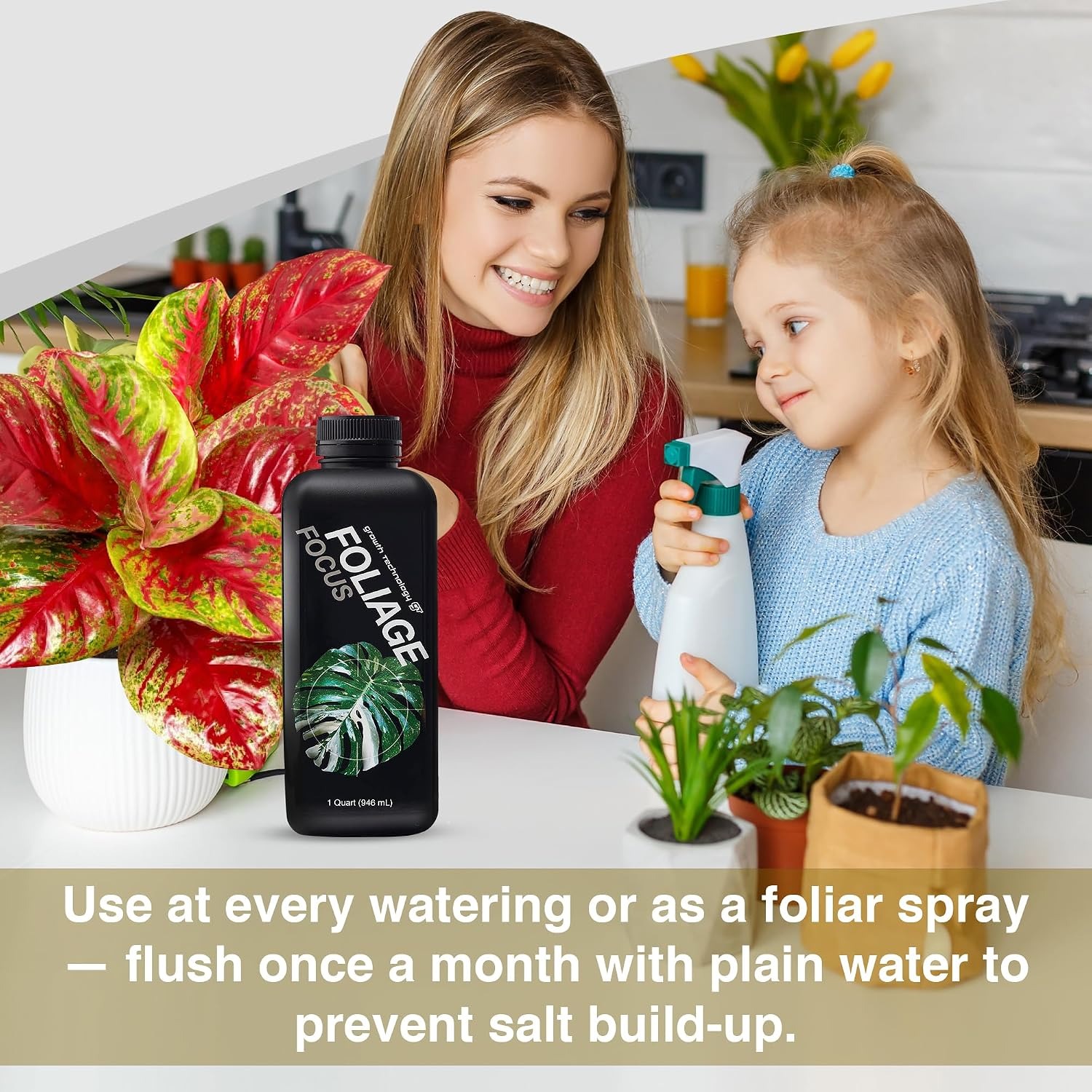
The fix is simple and takes minutes. Once a month, water through with plain water until it runs freely from the drainage holes, and let it drain properly. In a hydroponic system, drain the reservoir, refill with plain water for a cycle, then go back to your normal feed. If you spot a pale crust on the top of your potting mix, that is your cue.
While you are at it, rinse your watering can, spray bottle and measuring gear. Dried residue in a spray nozzle is the main reason foliar sprayers clog.
Handling and storage
Treat the concentrate with respect. Keep it out of reach of children and pets. Wear gloves and eye protection when you measure and mix. Avoid contact with skin and eyes, and do not eat, drink or smoke while handling it. If anyone swallows any, seek medical advice straight away.
Store the bottle upright with the cap on tight, out of direct sunlight and away from heat. A shelf in a cupboard, shed or laundry is fine. Mix only what you need for that watering rather than keeping diluted solution around.
A simple routine that works
Pick a day. Mix at your chosen rate. Feed everything that needs feeding. Note what rate you used somewhere you will see it again. Once a month, swap that session for a plain water flush.
That is the whole system. The plants that do best are rarely the ones getting clever treatments, they are the ones getting the same sensible feed on a predictable schedule, with clean water in between.
The short version
This is a 946 ml liquid concentrate for leafy, non-flowering plants. It carries nitrate-nitrogen, potassium, calcium, magnesium and trace elements, and it suits herbs, lettuce and leafy greens as well as indoor foliage plants.
Use 3 to 5 ml per litre in soil or potting mix, and 5 to 7 ml per litre in hydroponics. Go weaker when growth slows and stronger when it is fast, using the 1 to 20, 1.5 to 20 and 2 to 20 ratios as your guide. It can also be diluted and sprayed on the leaves.
Flush with plain water once a month, store it sealed and out of reach, and wear gloves when mixing. It is a feed for leaves, so pair it with something else if you are growing for fruit.