Hydroponics Company Australia
Company
Shop By Category
T&Cs
Shop Online
  • Free delivery across Australia on orders over $100
  • NFT systems, deep water culture, grow lights and accessories in one place
  • Customer support 7 days a week
  • Dispatch within 2 working days, then delivery in up to 7 working days by tracked courier

pH Meter | Waterproof pH Tester | Hydroponic pH Pen

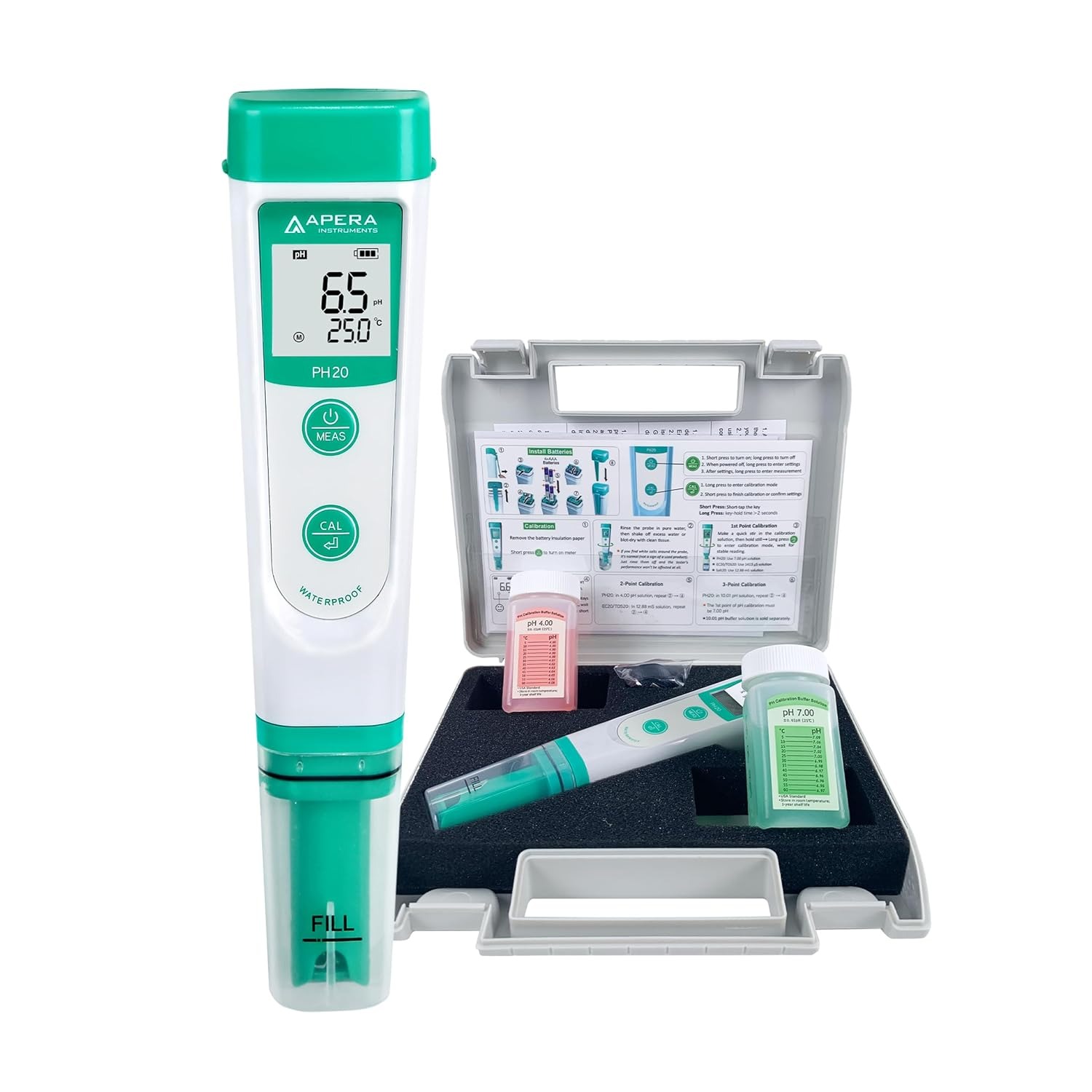
Waterproof Digital pH Meter Pen Kit

$181.99 $217.99 Save $36
  • Waterproof Build
  • Fast Readings
  • Auto Calibration
  • Long Battery Run

Price: $181.99 $217.99

  • Delivery time: up to 7 working days by tracked courier, after dispatch within 2 working days
  • Free delivery across Australia on orders $100+, otherwise a flat $30.00
  • Pay by card or PayPal, handled by the payment provider
  • 15 days to change your mind, plus your Australian Consumer Law guarantees

Often bought together

Product specifications
Model NamePH20
Model NumberAI209
BrandApera Instruments
Display TypeDigital
Special FeatureWaterproof
Measuring Resolution0.1 pH
Response Time5 seconds
Working Temperature Range0 to 50 C (32 to 122 F)
Immersion Depth10 cm
Power SourceBattery powered
Batteries4 x AAA (included)
Battery LifeUp to 2000 hours
Outer MaterialPlastic
Item Length218 mm
Item Weight3.9 oz (0.11 kg)
Included ComponentsPH20 Value pH tester kit
Kit ContentsMeter, pH 4 and pH 7 buffer solutions, lanyard, carry case
Specification MetCE, RoHS
CareHand wash only
Age RangeAdult
StyleRegular Kit
Unit Count1
Weight0.11 kg
Shipping & returns

Tracked delivery anywhere in Australia. It is free on orders of $100 or more, and a flat $30.00 below that. Allow up to 7 working days in transit after dispatch within 2 working days.

This shop's own returns policy gives you 15 days from delivery to change your mind, on every product it sells. Send it back in its original packaging with proof of purchase and we refund the price you paid for the goods, processed within 24 to 48 hours of the return arriving. You cover the cost of returning it unless the item is faulty.

If it arrives faulty, damaged or not as described, we put it right at no cost to you under the Australian Consumer Law's consumer guarantees, return postage included.

Shipping details · Refunds and returns

Waterproof BuildHandles splashes and spills around tanks and reservoirs.
Fast ReadingsResponse time of around five seconds per measurement.
Auto CalibrationRecognises the supplied pH 4 and pH 7 buffer solutions.
Long Battery RunUp to 2000 hours of operation on AAA batteries.

Keep your nutrient solution where you want it with a pocket pH meter that reads in about five seconds.

A waterproof digital pH tester with automatic calibration, automatic temperature compensation from 0 to 50 C and a 0.1 pH resolution, supplied as a kit with pH 4 and pH 7 buffers, a lanyard and a carry case.

A pocket-sized digital pH meter that gives you a reading in about five seconds, so checking your reservoir takes less time than filling a watering can.

Automatic temperature compensation works from 0 to 50 C, which means a cold morning tank and a warm afternoon one both read sensibly.

The kit arrives with pH 4 and pH 7 buffer solutions, 4 AAA batteries, a lanyard and a hard carry case, so you can calibrate and start testing straight away.

Resolution is 0.1 pH across a 0 to 14 range, which is the level of detail most home growers, pool owners and brewers actually need.

A waterproof plastic body and a hand-wash-only care routine make it easy to keep clean between uses.

Waterproof Digital pH Meter Pen Kit

Growing anything in water instead of soil puts pH front and centre. Soil has a buffering habit that hides small swings, but a nutrient reservoir does not. Let the number drift and your plants can sit in a tank full of food they cannot take up. This pocket pH meter is built for that job, a digital pen you can keep next to the reservoir and dip whenever you top up, mix fresh solution or notice leaves looking off colour.

Waterproof Digital pH Meter Pen Kit

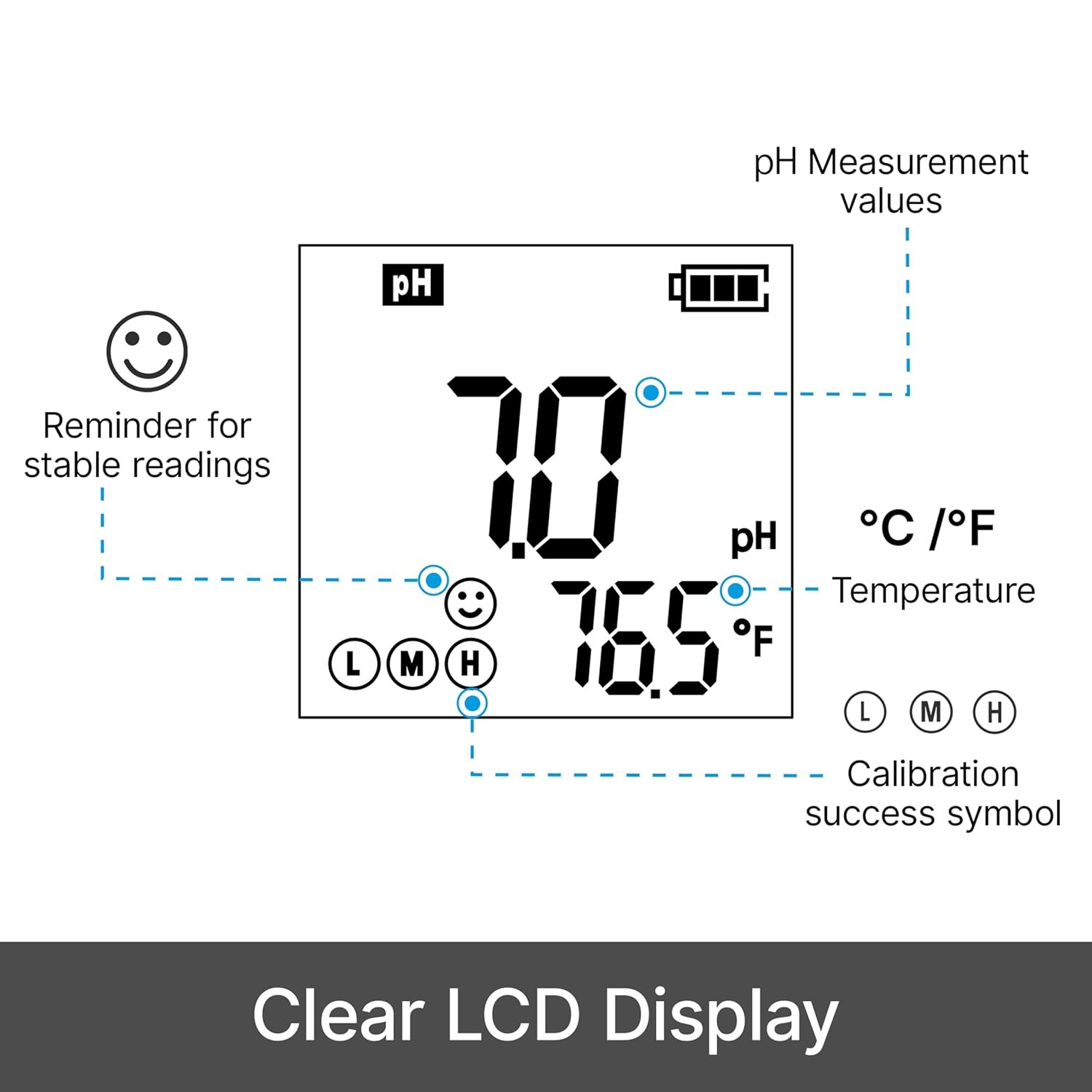
The reading comes through in about five seconds and shows to 0.1 pH across the full 0 to 14 range. That is the detail most home growers need. Automatic temperature compensation covers 0 to 50 C, so a reservoir that has been sitting in a cold shed overnight and the same tank in the afternoon sun will both give you a sensible number rather than a misleading one. The meter also recognises when a value has settled, which saves you staring at the screen trying to decide whether it has stopped moving.

Waterproof Digital pH Meter Pen Kit

Calibration is handled automatically against the buffer solutions supplied in the kit. You get pH 4 and pH 7 premixed sachets or bottles, which cover the acidic side of the scale where most nutrient work happens. A two-point calibration takes a couple of minutes and is worth doing on a regular schedule. The pen will also flag an incorrect buffer or a calibration that did not take, so you are not left trusting a bad setup.

Waterproof Digital pH Meter Pen Kit

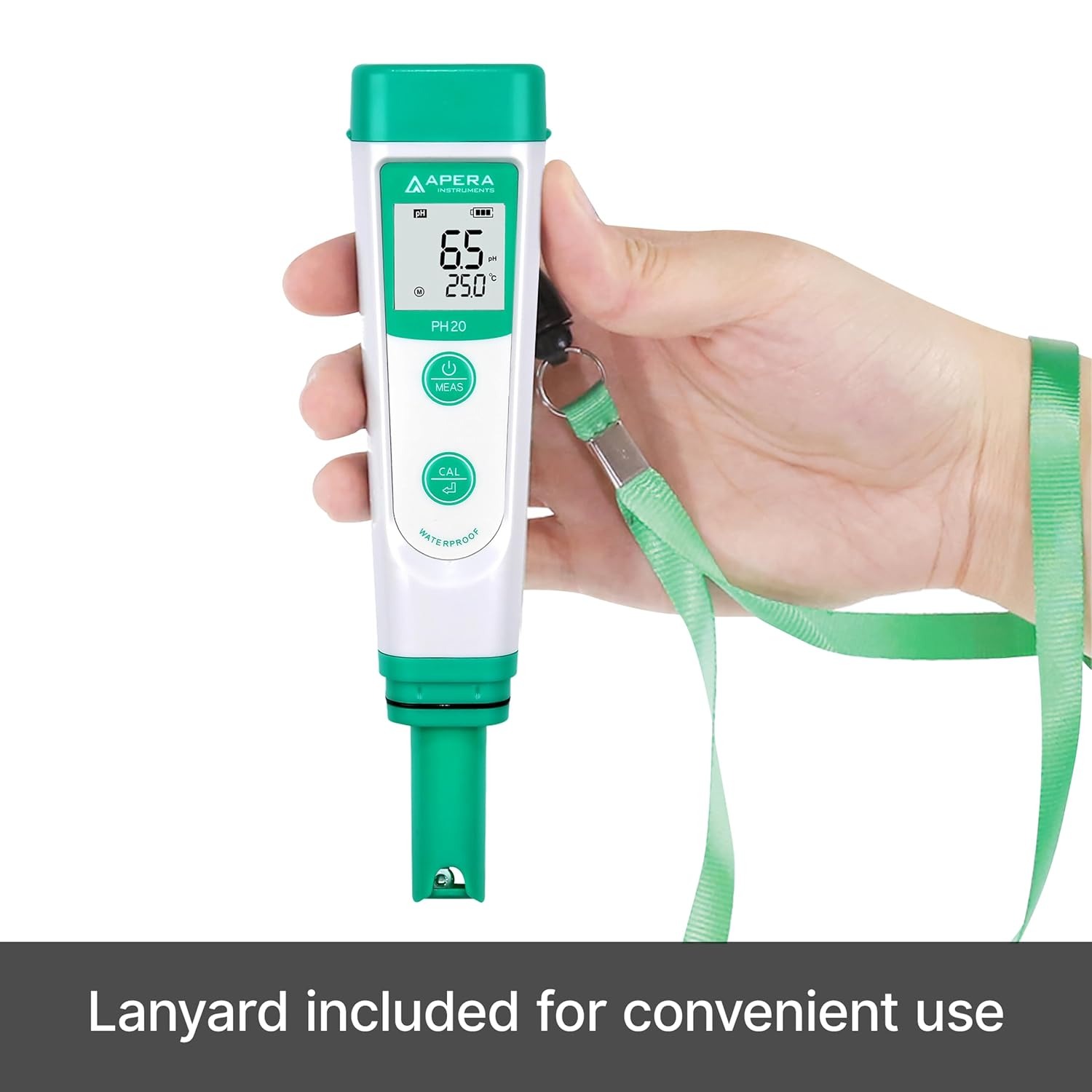
Everything packs into a hard carry case, which is the part people tend to appreciate after a few months. The meter, the buffers and the lanyard all have a home, so the sachets do not go missing in a drawer and the pen is not rattling around getting knocked. The lanyard is handy if you are leaning over a tank or working at height. The body is waterproof plastic and the immersion depth is 10 cm, so splashes and brief dunks are part of normal use.

Power comes from four AAA batteries, which are included in the kit, with up to 2000 hours of operation quoted. It is not rechargeable and it does not connect to a phone, which keeps the whole thing simple. Turn it on, dip it, read it, rinse it, cap it. For hydroponics, pool and spa water, brewing, aquariums and general water checks around the house, that short loop is exactly what you want.

Not sure yet? That is fine.

You can change your mind. This shop's own returns policy gives you 15 days from delivery to send it back in its original packaging with proof of purchase, and we refund the price you paid for the goods.

If it turns up faulty, damaged or not as described, that is on us. The Australian Consumer Law covers you, we pay the return postage, and you can have a repair, a replacement or your money back. Read the full detail on our refunds and returns page, or ask us anything before you order.

Frequently Asked Questions

What does this pH meter actually do?

It measures how acidic or alkaline a liquid is on the 0 to 14 pH scale and shows the result on a digital display. You dip the sensor tip into the liquid and read the number after a few seconds. It is used for nutrient solutions, pool and spa water, aquariums, brewing liquids and general water checks.

How fast is a reading?

The listed response time is 5 seconds. In practice you dip the tip, wait for the number to settle, and the meter indicates when the value is stable. That stability indication means you are not guessing about when to write the number down.

What resolution does it read to?

The resolution is 0.1 pH. That is the level most home growers and pool owners work at, since nutrient targets are usually quoted as a range rather than a single decimal point. If you need finer resolution than 0.1, this is not the tool for the job.

Is this a good pocket ph meter for a first-time hydroponic grower?

Yes, it is aimed squarely at that user. The auto calibration removes most of the fiddly setup, and the kit arrives with the buffer solutions you need so there is nothing extra to order on day one. The carry case keeps everything together between uses.

What comes in the box?

The kit contains the PH20 meter, pH 4 and pH 7 buffer solutions, a lanyard, a carry case and 4 AAA batteries. The included components are listed as the PH20 Value pH tester kit. You can calibrate and take your first reading without buying anything else.

Does it need batteries or is it rechargeable?

It runs on 4 AAA batteries, which are included with the kit. It is not a rechargeable unit, so you swap the batteries when they run down. Quoted operation is up to 2000 hours.

How long will the batteries last?

The listing quotes up to 2000 hours of continuous operation. Since most people use a pH pen for a minute or two at a time, that works out to a long stretch of normal use. Keep spare AAAs on hand anyway so a flat battery never stops a water change.

What is automatic temperature compensation and why does it matter?

Liquid temperature affects a pH reading, so the meter adjusts for it automatically across 0 to 50 C. Without compensation, the same reservoir measured on a cold morning and a warm afternoon could give you two different numbers. ATC means you can trust the figure without doing arithmetic.

What temperature range can I test in?

The working range is 0 to 50 C, which the listing also states as 32 to 122 F. That covers indoor tents, garages, greenhouses and outdoor tanks in most climates. Do not test liquids hotter than the top of that range.

How do I calibrate it?

Rinse the sensor, dip it into the pH 7 buffer and let the meter recognise and set itself, then rinse again and repeat with the pH 4 buffer. The meter identifies the buffers automatically, so you are not selecting values by hand. It will also warn you if a buffer looks wrong or a calibration did not complete.

How often should I calibrate?

A sensible habit is before any important measurement session, or at least whenever readings start to look odd compared with what you expect. Heavy daily users often calibrate weekly, while occasional users can stretch it further. Fresh buffer solution matters more than frequency, so do not reuse old liquid.

Can I buy more buffer solution later?

Yes, pH 4 and pH 7 calibration solutions are a standard consumable sold widely. Keep a sealed supply so you always have fresh liquid for calibration. Never pour used buffer back into the bottle.

Is it waterproof?

Waterproof is listed as a special feature of this model. The immersion depth is given as 10 cm, so the sensor end is designed to go into liquid. Do not drop the whole pen into a deep tank or leave it submerged.

How deep can I dip it?

The stated immersion depth is 10 cm. That is plenty for a reservoir, a bucket, a pool skimmer or a brewing vessel. Going deeper risks getting water past the sealed section.

Is this a suitable waterproof ph meter for pool and spa water?

Yes, pool and spa water is one of the common uses for a pocket pH pen. The same dip-and-read routine applies, and the auto temperature compensation helps when water sits warm. Rinse the tip afterwards because chlorinated water should not be left sitting on the sensor.

Can I use it for aquariums?

Yes. Take a small sample in a clean cup rather than dipping the pen straight into a stocked tank, so you are not introducing residue from buffers or previous tests. Rinse the sensor well between samples.

Can I use it for home brewing or kombucha?

It is suitable for general beverage making checks within the stated temperature range. Make sure the liquid is cooled to within 0 to 50 C before testing. Rinse the sensor thoroughly between samples so flavours and sugars do not build up on the tip.

What pH should I aim for in a hydroponic reservoir?

Most leafy greens and herbs grown in water do well in the slightly acidic range, and the nutrient brand you use will print a target on the label. Follow that target rather than a generic figure, then use the meter to confirm you are sitting in the range. Re-check after each top-up, since adding plain water moves the number.

How do I adjust pH if the reading is off?

You use a pH up or pH down solution sold for hydroponics, added a little at a time with the reservoir circulating. Add, wait a few minutes, then measure again rather than dosing all at once. The fast five second reading makes that back-and-forth quick.

Does it measure nutrient strength or EC as well?

No, this unit measures pH only. Nutrient strength is measured with a separate EC or TDS meter. Many growers keep both, since pH and strength tell you different things about the same tank.

Does it connect to a phone or app?

No. It is a standalone digital pen with an on-board display, with no wireless connection of any kind. You read the number off the screen and note it down if you keep a log.

How big is it and how heavy?

Item length is listed as 218 mm and the weight is 3.9 ounces, about 0.11 kg. It is a pen-style unit that fits in a pocket or a toolbox. The carry case adds a little bulk but keeps the buffers with it.

What is the outer material?

The outer material is listed as plastic. Specific colour and country of origin are not specified in this record. The kit style is described as Regular Kit.

How do I clean and store it?

Rinse the sensor with clean water after every reading and blot it dry with a soft tissue. Hand wash only, and never run it through a dishwasher. Cap it and store it in the carry case, and remove the batteries if it is going away for months.

What happens if the sensor dries out?

A dried sensor can be slow to respond or drift when you first use it again. Soaking the tip in clean water or storage solution for a while before calibrating usually settles it down. Building the habit of capping it straight after use avoids the problem.

Can I leave it in the reservoir permanently?

No, this is a handheld spot-check tool, not a continuous monitoring probe. Dip, read, rinse and put it away. Leaving it in solution will shorten the useful life of the sensor.

Is it suitable for children or school use?

The age range is described as adult. It can be used in an education setting under supervision, since it is a simple dip-and-read device. The buffer solutions should be handled by an adult and stored out of reach.

What certifications are listed?

The specification met field lists CE and RoHS. No other certifications are stated in this record, so we do not claim any. If you need documentation for a particular standard, check before ordering.

How long does delivery take?

Delivery is Australia wide. Orders are dispatched within 2 working days and then arrive within 7 working days by tracked courier. Delivery is free on orders of $100 or more, and a flat $30.00 otherwise.

Can I return it if it is not right for me?

Yes. You can return it within 15 days of delivery under our refunds and returns policy, which also explains how to send it back and who pays the return postage. Your rights under consumer law are not affected.

Choosing a pH Meter for Hydroponics, Pools and Home Water Testing

6 min read Hydroponics Company Australia

The problem with guessing

Anyone who has grown lettuce or basil in water instead of soil has had the same week. The plants looked fine, then the newer leaves went pale, then the growth slowed, and nothing about the feeding routine had changed. The nutrient bottle said the right dose. The tank was full. The light was on the same timer.

Very often the answer is pH. Plants take up different nutrients at different pH levels, and a reservoir that has drifted out of range can be packed with food that the roots simply cannot absorb. Soil is forgiving about this because it buffers small swings. A tank of water is not. Topping up with tap water moves the number. Plants drinking the solution move the number. A dose of nutrients moves the number. Over a week, a tank left alone can wander a long way.

That is the whole case for keeping a pH meter next to the reservoir. Not as a hobby gadget, but as the thing that turns "something is wrong" into "the pH is 7.4, that explains it".

How a pH pen works

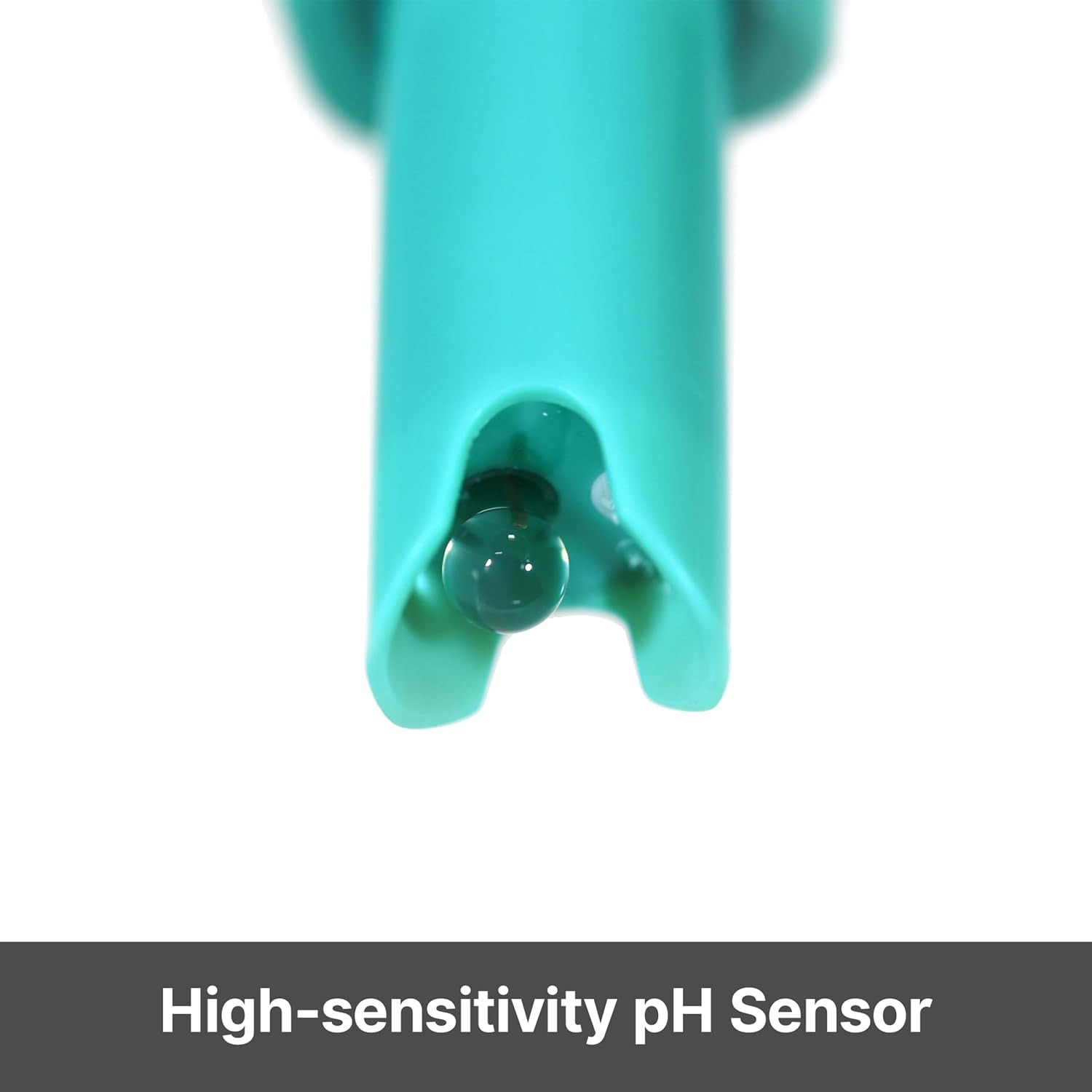
The business end of a pocket pH meter is a glass sensor that responds to the acidity of whatever liquid it is sitting in. The meter reads that tiny electrical signal and converts it into the number on the screen. That is the short version, and it is enough to use one properly.

Two features do most of the heavy lifting on this model. The first is automatic temperature compensation, which works across 0 to 50 C (the listing also gives it as 32 to 122 F). Temperature changes the signal the sensor produces, so without compensation the same tank would read differently at 12 C and 28 C. With it, the meter corrects for the water temperature and gives you a figure you can act on.

The second is automatic calibration. You dip the sensor in the supplied pH 7 buffer, then the pH 4 buffer, and the meter recognises each one and sets itself. There is no menu wrangling and no entering values. If a buffer is wrong or the calibration does not complete properly, the meter tells you rather than quietly carrying on with a bad reference point.

Readings come through in about five seconds, with a stability indicator so you know when the number has settled. Resolution is 0.1 pH across the 0 to 14 range. That is the level nutrient labels and pool guides are written at, so it matches the way you will actually use it.

Who it suits

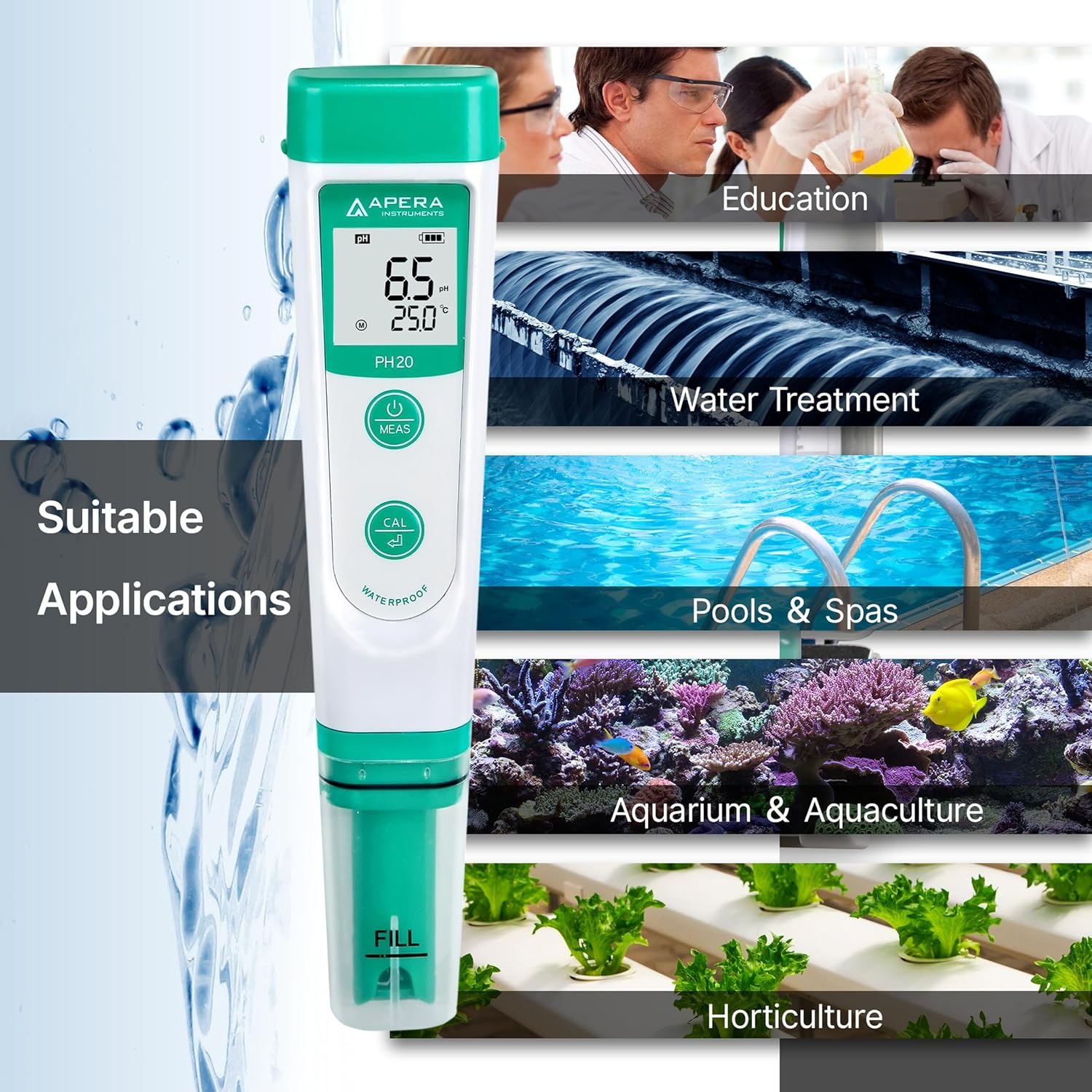
Home growers running herbs, leafy greens and vegetables in a recirculating system are the obvious fit. If you are mixing nutrients into a reservoir, you need to know where the pH sits before and after you dose, and a digital pH tester you can grab with one hand makes that a thirty second job.

Pool and spa owners are the second big group. Water balance drives whether your sanitiser works and whether the water feels comfortable, and a pen beats test strips for reading small differences.

Then there is everyone else. Home brewers checking a mash or a kombucha batch. Aquarium keepers checking a sample cup. People on tank water who want to know what is coming out of the pipe. Teachers running a science lesson. The device is the same in every case, it is just the liquid that changes.

It is worth being clear about what it does not do. This measures pH only. Nutrient strength is a separate measurement handled by an EC or TDS meter. Plenty of growers own both, because they answer different questions. pH tells you whether the plants can use the food. Strength tells you how much food is in there.

What to look at when choosing

Resolution and range. A 0 to 14 range covers everything a home user will meet. Resolution of 0.1 pH is the right level for nutrient work and pool water. Finer resolution exists, but it costs more and brings a calibration routine that is harder to keep up with.

Temperature compensation. This matters more than people expect, especially if your reservoir lives in a shed or a greenhouse where the temperature swings through the day. Automatic compensation means you do not have to think about it.

What the kit includes. A meter with no buffer solution is only half a purchase. This one ships with pH 4 and pH 7 buffers, a lanyard, 4 AAA batteries and a hard carry case. That is the difference between testing on the day it arrives and waiting for a second parcel.

Waterproofing. Testing water means being near water. A waterproof body with a stated immersion depth of 10 cm handles splashes, drips and the occasional slip into a bucket. It does not mean you can drop the whole pen into a deep tank and fish it out later.

Power. This runs on AAA batteries, with up to 2000 hours of operation quoted. There is no charging cable to lose and no battery that degrades over the years. Keep a spare set in the carry case and you will never be caught out.

Size. At 218 mm long and 0.11 kg, it is a pen you can clip to a lanyard and carry around a greenhouse without noticing.

Getting good numbers out of it

Calibration is the habit that separates useful readings from decorative ones. Calibrate with fresh buffer before any session where the result matters, and never pour used buffer back into the bottle. Two-point calibration with pH 4 and pH 7 takes a couple of minutes and covers the acidic side of the scale where nutrient work lives.

Rinse the sensor with clean water between samples. Carrying a few drops of pH 4 buffer into your reservoir reading will skew the result, and so will leftover nutrient solution when you move to a pool sample. Blot the tip dry with a soft tissue rather than rubbing it.

When you adjust pH, go slowly. Add a small amount of pH up or pH down with the water circulating, wait a few minutes, then measure again. The fast reading time makes that loop painless. Dosing heavily and measuring once is how people end up chasing the number back and forth all evening.

Keep a short log if you can. Date, pH, water temperature, what you added. Three weeks of notes will show you how fast your particular tank drifts, and after that you will know when to check without being told.

Care and storage

The care instruction on this unit is hand wash only. Rinse after each use, cap it, and put it back in the case. Do not leave the sensor sitting in solution permanently, because this is a spot-check tool rather than a continuous probe.

If the pen is going into storage for a long stretch, take the batteries out. A dried-out sensor can be slow or drifty when you come back to it, so give the tip a soak in clean water before you calibrate again. Treat the buffer sachets like any other consumable and keep sealed stock on hand.

The carry case earns its keep here. Buffers stay with the meter, the lanyard does not vanish, and the pen is not rolling around in a drawer with the secateurs.

The short version

A pH meter stops you guessing. For hydroponics it is close to essential, because a reservoir will drift and your plants cannot tell you why they have stopped growing. For pools, spas, brewing and general water checks it saves you squinting at a colour chart.

This one is a waterproof digital pen with 0.1 pH resolution, a five second response, automatic calibration against the included pH 4 and pH 7 buffers, and temperature compensation from 0 to 50 C. It runs on four AAA batteries, which are in the box, and quotes up to 2000 hours of operation. Everything packs into a carry case with a lanyard.

Calibrate it regularly, rinse it after every reading, and it will give you a number you can act on in less time than it takes to fill a watering can.

Browse the shop

Not sure which meter suits your setup?

Tell us what you are testing and how often, and we will help you work out whether a pocket pH pen covers it.

Ask us a question

Page summary

The Apera Instruments PH20 (model AI209) is a waterproof, battery-powered digital pH meter pen sold as a regular kit. It measures across 0 to 14 pH with 0.1 resolution and a response time of about 5 seconds, with automatic temperature compensation covering 0 to 50 C (32 to 122 F). Automatic calibration recognises the supplied pH 4 and pH 7 buffer solutions. The kit includes the meter, buffers, a lanyard, a carry case and 4 AAA batteries, with up to 2000 hours of operation quoted. Immersion depth is 10 cm, item length 218 mm, weight 0.11 kg, outer material plastic, care hand wash only. CE and RoHS are listed. Colour, country of origin and overall case dimensions are not specified in this record.